2025.12.08
西郷薫先生 追悼
西郷薫先生(東京大学名誉教授)におかれましては、去る今月四日、享年八十歳にてご逝去されました。ここに謹んでご報告申し上げます。
西郷先生は、長年にわたり発生生物学の発展に多大なご貢献をなされ、多くの優れた研究者を育てられました。
卒業生の方々が現在も発生生物学をはじめとする様々な分野で活躍されていることこそ、先生のご指導の深さを物語っております。
私自身も学部・大学院を通じて西郷先生にご指導いただき、研究者として歩む礎を築いていただきました。
私が今日まで研究を続けてこられたのは、先生から受けたご指導があったからこそだと感じており、そのご逝去に接し、深い悲しみと寂しさを覚えております。
謹んで西郷先生のご冥福をお祈り申し上げます。
金沢大学新学術創成研究機構 佐藤 純
2025.10.08
Sir John Gurdon 追悼
I would like to express my deepest condolences on the passing of Sir John Gurdon.
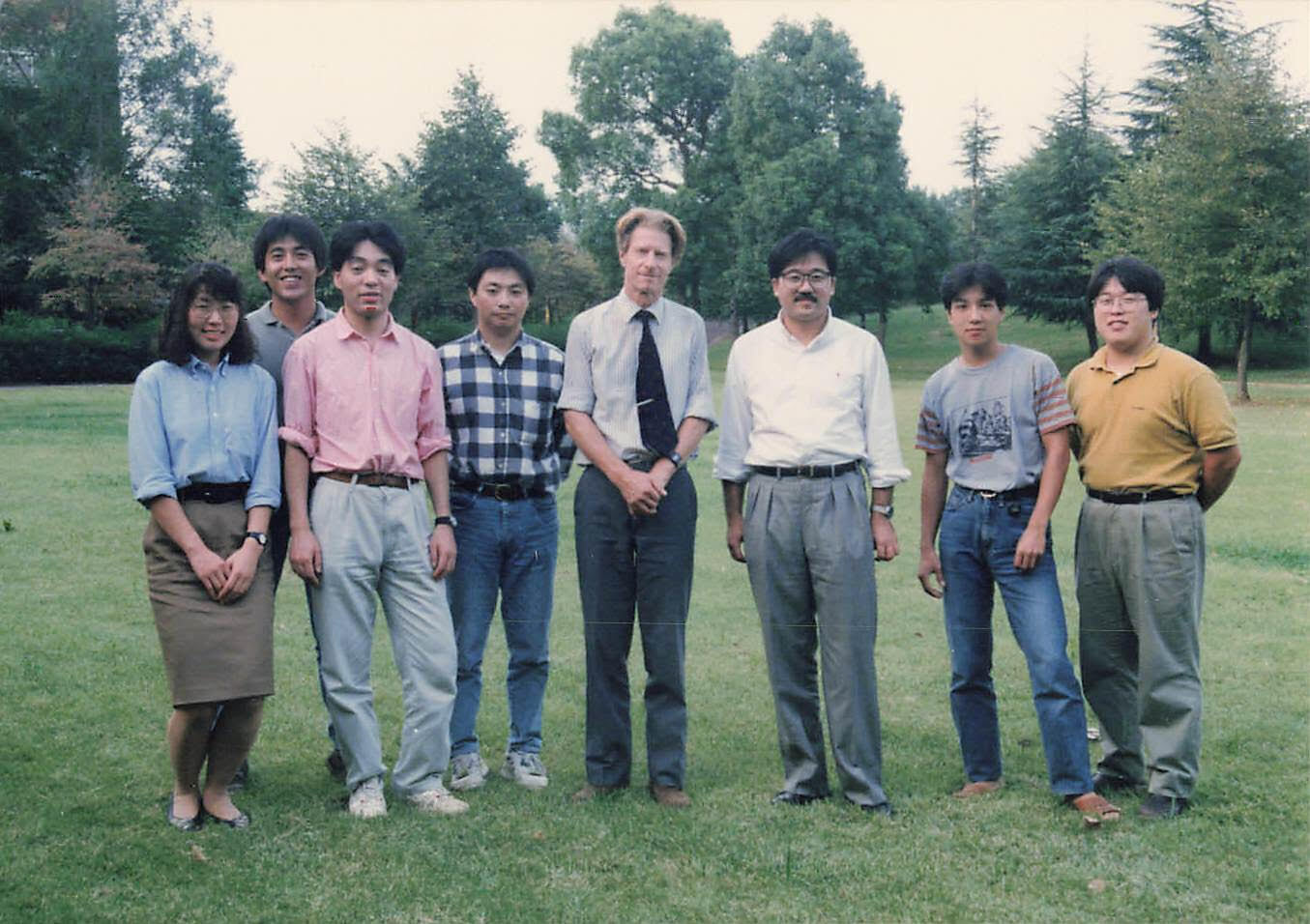
I first met Sir John nearly forty years ago, shortly after I returned to Japan from the United States and had just begun my research in developmental biology. At that time, I had only recently started experiments using animal caps at the University of Tsukuba. During one of his visits to Japan, he kindly came to Tsukuba University. I still remember having lunch with him and Professor Satoru Kobayashi (University of Tsukuba) and some other colleagues at the hotel nearby, where we discussed the heterogeneity of animal caps. He also visited my laboratory, and the photograph we took together on campus remains a treasured keepsake for me and for the lab members of that time.
In the years that followed, Sir John visited Japan on several occasions—for the International Xenopus Conference, meetings of the Grant-in-Aid for Scientific Research on “Dynamics of Developmental Systems,” and conferences to promote genomics research on Xenopus laevis. On each occasion, he provided great inspiration to Japanese researchers. His receipt of the Nobel Prize in Physiology or Medicine in 2012, together with Dr. Shinya Yamanaka, was a tremendous encouragement to all of us working in developmental biology.
Sir John was a thoughtful and calm scholar, yet when it came to scientific discussions, he spoke with remarkable enthusiasm and passion. Although he was a great scientist, I will never forget the innocent, boyish smile that he would occasionally show.
I sincerely pray for the repose of his soul.
Naoto Ueno,
National Institutes of Natural Sciences, National Institute for Basic Biology